


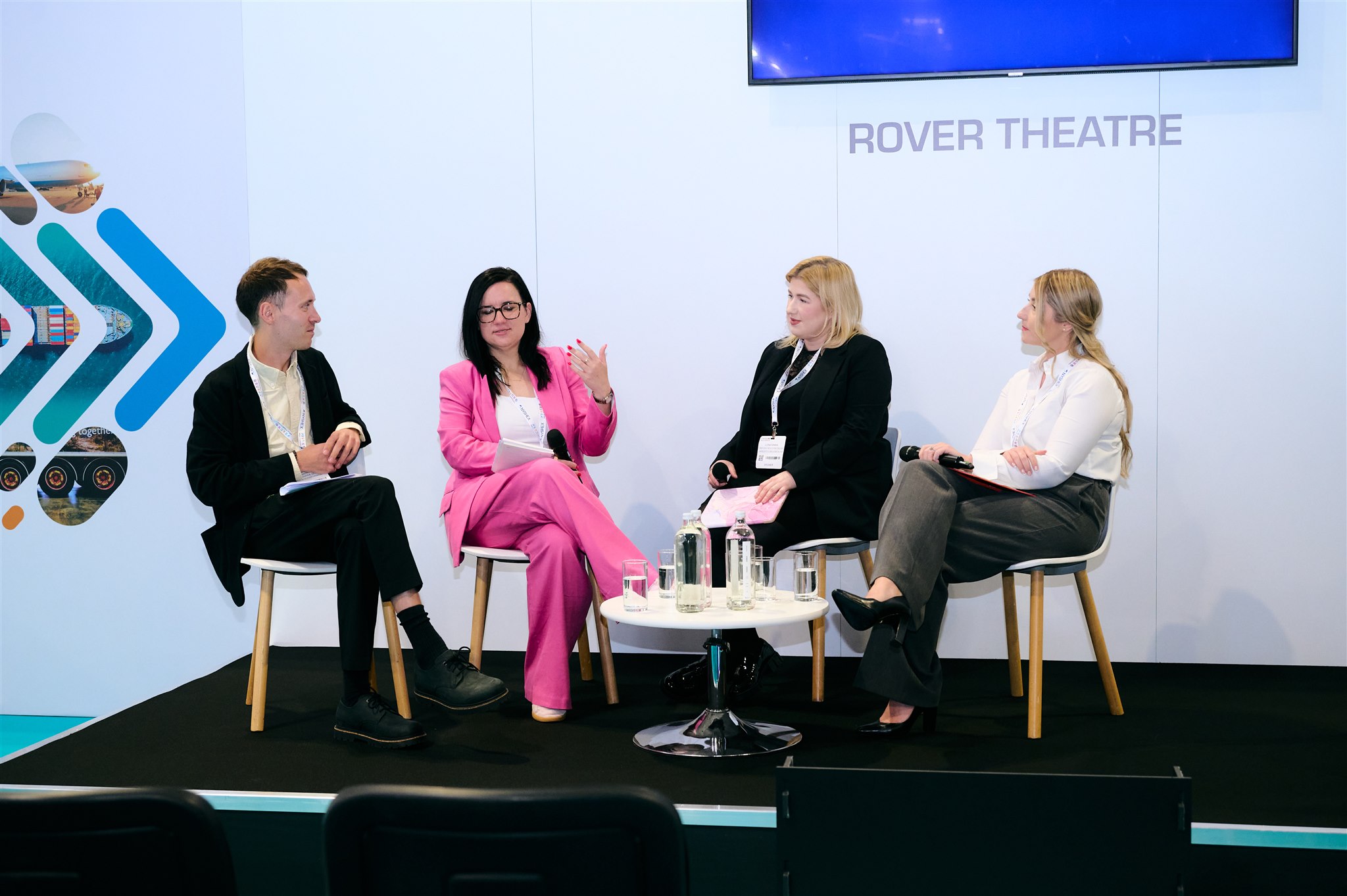


In celebration of International Women's Day 2026 and its theme of #GiveToGain, the predominantly female team behind Multimodal — the UK's leading freight, logistics and supply chain event — share their experiences of working in a historically male-dominated industry and why now is the best time for women to step into logistics.
Multimodal 2026 returns to the NEC, Birmingham this June, and ahead of this year's show, the team that makes it happen is taking a moment to speak candidly about gender equality, workplace culture and the industry transformation they are proud to be part of.
With women holding roles spanning commercial development, operations, marketing and event management, the Multimodal team — part of global events organiser Clarion Events — is living proof that logistics is no longer simply a man's world.
A team that reflects the industry's evolution
Manjit Sandhu, Commercial Director, has seen first-hand how the industry is shifting. Her day-to-day role focuses on engaging companies across exhibition, awards, conference and visiting opportunities at Multimodal — work that demands deep listening and a sharp commercial instinct. She says:
"To represent the event within a traditionally male-dominated industry has been a proud moment — especially as it allowed us to showcase the diversity and strength of our team."
Kara Bowen, a sales specialist, echoes that sentiment. Having spent over 30 years in the exhibitions industry, she sees the wider freight and logistics sector following the same path towards greater inclusion — and urges the next generation to embrace it.
"Believe. Be a sponge and soak it up, find your mentors and work with them. Find a company that cares, with values akin to your own, and be happy."
Skills women already have — and logistics needs
Sara Mikunda, who has worked on Multimodal for approximately 15 years and oversees marketing, communications and partnerships, has watched the sector transform across three decades in freight and logistics.
"I do think women bring different leadership styles which embrace teamwork, openness and long-term strategy — they can offer a different angle to issues and problems, which in freight and logistics is a very valuable asset."
Manjit adds a compelling argument for women who may feel uncertain about entering the sector:
"Many women already manage complex logistics every day, often without even calling it that. A career in logistics simply builds on skills women use constantly, and the industry benefits enormously from that strength and perspective."
A culture built on trust, openness and collaboration
Behind the scenes, the culture at Clarion Events — the business that produces Multimodal — is one that several team members describe as the foundation of their professional confidence.
Gemma Gilbert, Operations Manager, joined straight from education and describes how everyday behaviours have shaped her understanding of what an inclusive workplace can look like.
"Skill, confidence, and professionalism are what matter. If you're willing to learn and back yourself, there is definitely a space for you."
Phillipa Chisnell, who serves as the vital first point of contact for exhibitors and visitors, notes that it is often the small, consistent gestures that define a valued workplace — from the way concerns are raised and heard, to the everyday moments of recognition.
"Equality at work looks like all employees having equal opportunities, fair treatment, and access to resources regardless of background, gender or disability."
Kara points to transparency and trust as the culture's defining features: "The culture is built on openness — information is shared broadly, decisions are explained, and trust is intentional. There is no ceiling, no barriers, and an immense feeling of team."
The future is more balanced, collaborative and forward-thinking
When asked what freight and logistics looks like with more women at the table, the team is united in optimism.
"With more women at the table, the future of freight and logistics becomes more balanced, collaborative and forward-thinking. Greater diversity strengthens problem-solving and decision-making, leading to a more innovative and resilient industry, commented Manjit.
Phillipa, meanwhile, points to something even more fundamental — the very survival of global trade: "It is the most important industry to be in, in order for this earth to survive."
Equality at work looks like...
The team was asked to complete the sentence 'Equality at work looks like...' Their answers, taken together, paint a picture of a workplace — and an industry — on the right path:
"...a place where every voice is valued and everyone has the space to thrive."
"...a team filled with supportive individuals, no matter gender, creed or colour."
"...everyone being given the same opportunities, respect and recognition based on their ability and contribution."
"...creating a world where the only barriers are the ones in your own head."

